Showing posts with label Science and Technology. Show all posts

Tuesday, 16 June 2015


Description of Surely You're Joking Mr Feynman (English) (Paperback) by Richard P Feynman

Surely You're Joking Mr. Feynman: Adventures Of A Curious Character is an almost autobiographical take on the life of the eccentric author, Richard P. Feynman. The book itself is a simple transcription of the many conversations that the author had with Ralph Leighton. The fact that the text hasn't been fully edited points to the honesty of the book and the bare, candid account of the various hilarious events that took place in the life of this Nobel Prize-winning physicist.

Many incidents in Richard P. Feynman's life are light-hearted and talk about his fascination with cracking safes, learning new languages, incidents like the time he painted a naked toreador and even playing on the drums to accompany a ballet.

There are other, more serious anecdotes, however, that detail incidents such as the author's work on The Manhattan Project, during which time his wife died of Tuberculosis. Another chapter details the time he presented the Wheeler-Feynman absorber theory to renowned physicists Albert Einstein and Wolfgang Pauli.

The title of the book is directly derived from a time the author visited Princeton University. A woman at the university asked the author whether he would like to have cream or lemon in his tea, to which he naively responded that he'd like both, earning the titular response from the woman.

Surely You're Joking Mr. Feynman: Adventures Of A Curious Character delves deep into the personality of one of the world's foremost scientist. In a few instances, Richard P. Feynman describes oddities such as his lucid dreams that had him speaking to his foreign colleagues and perfectly imitating their accents. This was something that the author was unable to do whilst he was awake. The book was first published in 1985 and sold 500,000 copies.

About Richard P. Feynman

Richard P. Feynman was a world renowned theoretical physicist and a Nobel Prize-winner who played a pivotal role in the foundations of quantum mechanics and nanotechnology.

His other books include The Feynman Lectures on Physics and What Do You Care What Other People Think?

Richard P. Feynman was best known for his work on the path integral formulation of quantum mechanics, the quantum electrodynamics theory and the parton model of particle physics, which he proposed. He died at the age of 69 in the February of 1988 of two rare forms of cancer and his last words were reportedly that he wouldn't want to die twice as he found it boring.

Specifications of Surely You're Joking Mr Feynman (English) (Paperback) by Richard P Feynman

Publisher

Random House

ISBN-10

009917331X

Edition

New ed

Imprint

Vintage

Number of Pages

352 Pages

Publication Year

1992 November

Language

English

ISBN-13

9780099173311

Binding

Paperback


CLICK HERE to buy Surely You're Joking Mr Feynman (English) (Paperback) by Richard P Feynman with special discounts and Options with Cash On Delivery,30 Day Replacement Guarantee.

Monday, 6 January 2014

Buy Electronic Devices And Circuits Theory 10 Edition: Book
Description off Electronic Devices And Circuits Theory 10 Edition (Paperback) by Robert L. Boylestad, Louis Nashelsky

Electronic Devices and Circuit, currently in its tenth edition, offers readers a complete and comprehensive survey of electronics and circuits.

Summary Of The Book

This book was initially published in 1972 and has been a highly accurate and easily comprehensible university level text throughout the modern period of electronics and computer revolution.

Starting with semiconductor diodes and diode applications, the book systematically progresses from one chapter to another. It provides a thorough understanding of fundamental concepts like diodes and transistors before tackling the higher level topics like Bipolar Junction Transistor (BJT) devices, and Field-Effect Transistor (FET) devices.

In addition to that, it deals with various other topics like Feedback and Oscillator Circuits, Power Supplies, other Two-Terminal Devices, and PNPN and other devices. It also reflects on the growing importance of operational amplifiers in today's market. Along with the basics of designing FET amplifier networks, all the typical configurations of JFET and MOSFET circuits has also been examined.

The authors take a systems approach to their subject, ensuring students comprehend fundamental concepts before they tackle advanced topics as compound configurations, power supplies, and oscilloscopes. The circuit files are also provided. For each device examined, the text covers most configurations and applications and also included are discussions of the full range of related topics typically addressed in the course, with clear, precise explanations and plenty of examples to back them up.

Below mentioned Departments all are covered by this book

Electrical Engineering, Electrical Engineering, Instrumentation and Control Engineering, Computer Science Engineering, Computer Science Engineering, Aeronautical Engineering, Electronics & Communication Engineering, Electronics & Communication Engineering, Civil Engineering, Electronics Engineering, Chemical Engineering, Mechanical Engineering, Electrical Engineering, Biotechnology, Information Technology, Information Technology

About The Authors

Robert L. Boylestad is professor emeritus of electrical and computer technology at Queensborough Community College, part of the City University of New York, and was an assistant dean in the Thayer School of Engineering of Dartmouth College.

Louis Nashelsky, is a Professor of Electrical and Computer Technology at Queensborough Community College of the City University of New York. He is also Chairman of the Department of Electrical and Computer Technology. Nashelsky has a BSEE and an MSEE from City College, CUNY. He received his PhD from Worcester Polytechnic Institute.

Apart from Electronic Devices and Circuit Theory, Boylestad and Nashelsky have also co-authored other books like Introductory Circuit Analysis and Fundamentals of Electronics.

Specifications of Electronic Devices And Circuits Theory 10 Edition (Paperback) by Robert L. Boylestad, Louis Nashelsky
Publisher Pearson
Publication Year 2009
ISBN-13 9788131727003
ISBN-10 8131727009
Language English
Edition 10
Binding Paperback
Number of Pages 912 Pages

CLICK HERE to Purchase online Electronic Devices And Circuits Theory 10 Edition (Paperback) by Robert L. Boylestad, Louis Nashelsky with special discounts and Options with Cash On Delivery, 30 Day Replacement Guarantee.


Friday, 27 December 2013

Buy Organic Chemistry 7th Edition: Book
Description of Organic Chemistry 7th Edition (Paperback) by Robert Thornton Morrison, Robert Neilson Boyd, Saibal Kanti Bhattacharjee
As in the earlier editions, the book conveys the important fundamentals and principles of the subject in a simple and easily understandable manner.

Table Of Contents
  • Part I: Fundamentals of Organic Chemistry Part
  • II: Chemistry of Functional Groups Part
  • III: Special Topics Part
  • IV: Biomolecules and Bioorganic Chemistry Part
  • V: Contemporary and Future Organic Chemistry
Specifications of Organic Chemistry 7th Edition (Paperback) by Robert Thornton Morrison, Robert Neilson Boyd, Saibal Kanti Bhattacharjee
Publisher Pearson
Publication Year 2011
ISBN-13 9788131704813
ISBN-10 8131704815
Language English
Edition 7thEdition
Binding Paperback
Number of Pages 1508 Pages
Exam Engineering

CLICK HERE to Buy online Organic Chemistry 7th Edition (Paperback) by Robert Thornton Morrison, Robert Neilson Boyd, Saibal Kanti Bhattacharjee with special discounts and Options with Cash On Delivery, 30 Day Replacement Guarantee.

Buy Concise Inorganic Chemistry for JEE Main and Advanced 2nd Edition: Book
Description of Concise Inorganic Chemistry for JEE Main and Advanced 2nd Edition (Paperback) by Sudarsan Guha, J. D. Lee
Three new chapters: Hydrolysis, Metallurgy and Qualitative Salt Analysis.
  • Chapters 2, 3, 4 and 5 of the original combined into single chapter on Chemical bonding.
  • The s-, p-, and d- block elements and their compounds covered in single chapter each.
  • Chapters 29, 30, 31 and 32 of original removed
  • Assessment as per IIT-JEE comprising all question types
  • Single Correct Choice Type Questions (232)
  • Multiple Correct Choice Type Questions (126)
  • Comprehension Type Questions (161)
  • Assertion-Reasoning Type Questions (148)
  • Integer Answer Type Questions (94)
  • Matrix-Match Type Questions (59)
  • Answers for all the problems at the end of chapter.
  • Useful appendices.
  • New Chapter 12 (f-Block Elements)
  • Additional section (Dipole Moment)in Chapter 3
  • Additional end of chapter questions in Chapters 1 to 6
Table of contents
Atomic structure and the Periodic table.
• Introduction to bonding.
• The ionic bond.
• The covalent bond.
• The metallic bond.
• General properties of the elements.
• Coordination compounds.
• Hydrogen and the hydrides..
• Group 1 - The alkali metals.
• The chlor-alkali industry.
• Group 2 - The alkaline earth elements..
• The group 13 elements.
• The group 14 elements.
• The group 15 elements.
• Group 16 - the chalcogens.
• Group 17 - the halogens.
• Group 18 - the noble gases.
• An introduction to the transition elements.
• Group 3 - The scandium group.
• Group 4 - The titanium group.
• Group 5 - The vanadium group.
• Group 6 - The chromium group.
• Group 7 - The manganese group.
• Group 8 - The iron group.
• Group 9 - The cobalt group.
• Group 10 - The nickel Group.
• Group 11 - The copper group: Coinage metals.
• Group 12 - The zinc group..
• The lanthanide series.
• The actinides.

Specifications of Concise Inorganic Chemistry for JEE Main and Advanced 2nd Edition (Paperback) by Sudarsan Guha, J. D. Lee
Publisher Wiley
Publication Year 2011
ISBN-13 9788126541478
ISBN-10 8126541474
Language English
Edition 2nd
Binding Paperback
Number of Pages 648 Pages

CLICK HERE to Buy online Concise Inorganic Chemistry for JEE Main and Advanced 2nd Edition (Paperback) by Sudarsan Guha, J. D. Lee with special discounts and Options with Cash On Delivery, 30 Day Replacement Guarantee.

Saturday, 19 October 2013

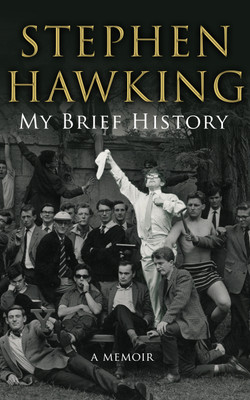
Buy My Brief History : A Memoir: Book
Descriptions of My Brief History : A Memoir(Hardcover) by Stephen Hawking
Stephen Hawking has dazzled readers worldwide with a string of bestsellers exploring the mysteries of the universe. Now, for the first time, the most brilliant cosmologist of our age turns his gaze inward for a revealing look at his own life and intellectual evolution. My Brief History recounts Stephen Hawkings improbable journey, from his post-war London boyhood to his years of international acclaim and celebrity. Lavishly illustrated with rarely seen photographs, this concise, witty and candid account introduces readers to a Hawking rarely glimpsed in previous books the inquisitive school boy whose classmates nicknamed him Einstein the jokester who once placed a bet with a colleague over the existence of a black hole and the young husband and father struggling to gain a foothold in the world of academia. Writing with characteristic humility and humour, Hawking opens up about the challenges that confronted him following his diagnosis of ALS aged twenty-one. Tracing his development as a thinker, he explains how the prospect of an early death urged him onward through numerous intellectual breakthroughs and talks about the genesis of his masterpiece. A Brief History of Time, one of the iconic books of the twentieth century. Clear-eyed, intimate and wise, My Brief History opens a window for the rest of us into Hawkings personal cosmos.

Specifications of My Brief History : A Memoir(Hardcover) by Stephen Hawking
Publisher Random House
Publication Year 2013 September
ISBN-13 9780593072523
ISBN-10 0593072529
Language English
Edition 1st
Binding Hardcover
Number of Pages 144 Pages
Book Type Non Fiction Book

CLICK HERE to Buy My Brief History : A Memoir(Hardcover) by Stephen Hawking with special discounts and Options with Cash On Delivery, 30 Day Replacement Guarantee.

Thursday, 1 August 2013

Foucault pendulum

This article will help to you concepts of motion and gravitational force. Motion is as much a part of the physical world as matter and energy. Everything moves—atoms and molecules; the stars, planets, and moons; the earth and its surface and everything on its surface; all living things, and every part of living things. Nothing in the universe is at rest.

Most of the time, the relative motion of the earth does not affect our perception of motion. Since everything is moving, there is no fixed reference point against which the motion of things can be described. All motion is relative to whatever point or object we choose. Thus, a parked bus has no motion with reference to the earth's surface; but since the earth spins on its axis, the bus is moving about 1,000 miles per hour around the center of the earth.

There is no point in space that can serve as a reference for what is actually moving. However, in 1848, Jean Foucault discovered that when a large pendulum swings, the earth appears to "move under it."

To prepare for this article, every one should understand that everything in the universe exerts gravitational forces on everything else, although the effects are readily noticeable only when at least one very large mass is involved (such as a star or planet). Gravity is the force behind the fall of rain, the power of rivers, the pulse of tides; it pulls the matter of planets and stars toward their centers to form spheres, holds planets in orbit, and gathers cosmic dust together to form stars. Gravitational forces are thought of as involving a gravitational field that affects space around any mass. The strength of the field around an object is proportional to its mass and diminishes with distance from its center. For example, the earth's pull on an individual will depend on whether the person is, say, on the beach or far out in space.

Changes in motion—speeding up, slowing down, changing direction—are due to the effects of forces. Any object maintains a constant speed and direction of motion unless an unbalanced outside force acts on it.

Everyone especially students should begin to understand how the principle of universal gravitation explains the architecture of the universe and much that happens on the earth. The principle will become familiar from many different examples (star formation, tides, comet orbits, etc.) and from the study of the history leading to this unification of earth and sky.

It is important for all to escape the common misconceptions that the earth's gravity does not extend beyond its atmosphere or that it is caused by the atmosphere.

Some usefull FAQ's for you
What is the orgin of word "PENDULUM"?
Word comes from LATIN word "pendulus" which mean "hanging"

What is the purpose of use Pendulum?
To understand how the motion of the Foucault pendulum proves that the earth is rotating.

Related Videos of Pendulum


This is a video compilation of a Foucault pendulum in action at the Houston Museum of Natural Science. The rotation of the plane of the pendulum's oscillations demonstrates that the earth is a rotating reference frame. The number of rotations it makes in one day (about 180 degrees in 24 hours) also indicates the latitude of the museum (about 30 degrees north of the equator).

By my count, there must be exactly 144 pins forming a circle on the floor underneath the pendulum. In the video, you will see two pins get knocked over, 1 hour apart. There was another pin between these two that gets tipped over, but this event is not on the video.

With this data, I expect the time for two adjacent pins to get knocked over to be 48/144 = 0.33 hours. Between the 3 pins getting knocked over, it should have taken only 40 minutes, not 1 hour. Perhaps the spacing or position of the pins were uneven?

At latitude L in the northern hemisphere, the plane of the pendulum's oscillations rotates clockwise by the amount 360*sin(L) degrees in one day. One can google to find out how this expression can be obtained, but let me point out two illuminating remarks regarding this expression: (1) It is the projection of the angular velocity of the earth (magnitude 360 degrees per day) onto the vertical direction at latitude L. (2) It is related to the net rotation of a vector resulting from parallel transport along a closed circuit on the surface of a sphere. This rotation is given by the solid angle subtended by the surface enclosed by the circuit. In the case of our pendulum, the circuit is the circle of latitude. We get 360*sin(L) after subtracting 360 from the solid angle subtended by the surface enclosed by the circle of latitude and that includes the north pole.

The museum is at latitude 29 deg 46 min N, according to the touch-screen panel near the pendulum. My old Magellan handheld GPS reported coordinates of 29 deg 43.281 N, 95 deg 23.353 W, 23 ft, which is pretty close. Plugging L~30 deg into our formula, we get 360*sin(30)=180 deg/day.

Other facts I learned from the touch-screen:
Pendulum weight - 180 lbs (81.6 kg)
Length - 61.6 feet (18.8 m)
Period - 8.71 sec
Swing angle - 5 deg
Displacement - 65 inches (1.65m)

This Foucault pendulum was invented by Jean Bernard Léon Foucault was a French physicist also known as Shortly "Léon Foucault".
Click here to read more about Léon Foucault and his inventions

Monday, 25 February 2013

advance search at your gmail account


Emails play very important role in our daily life. Now a days, daily we receive lot of emails to our inbox. So inbox getting very huge with in very short period even we delete unwanted mails. Due to this huge emails, while trying to get a specific email from the specific sender its going to little bit hard. Its really sometimes hurt us. So avoid these kind of situation the email service providers like google,yahoo,bing etc., provide such a good search options. These search options helps us to search with in our mail account. Below i mentioned some of search options which is supported into Gmail.
  • to: – Search for messages sent to a specific address.
  • from: – Search for messages sent from a specific address
  • subject: – Search the subject field.
  • label: – Search within a specific label.
  • has:attachment – Search only for messages that have attachments
  • is:chat – Search only chats.
  • in:anywhere – Also search for messages in the spam and trash. By default, Gmail's search ignores messages in the spam and trash.
  • ( ) – Brackets allow you to group search terms. For example, searching for subject:(how times) would only return messages with the words "how" and "times" in their subject field. If you search for subject:how times, you'd get messages with "how" in their subject and "times" anywhere in the message.
  • OR – OR, which must be in capital letters, allows you to search for one term or another. For example, subject:(how OR times  would return messages with the word "how" or the word "times" in their titles. You can also combine other terms with the OR. For example, from:timesofbook.com OR has:attachment would search for messages that are either from timesofbook.com or have attachments.
  • " " – Quotes allow you to search for an exact phrase, just like in Google. Searching for "exact phrase" only returns messages that contain the exact phrase. You can combine this with other operators. For example, subject:"exact phrase" only returns messages that have "exact phrase" in their subject field.
  • - – The hyphen, or minus sign, allows to search for messages that don't contain a specific term. For example, search for -from:timesofbook.com and you'll only see messages that aren't from timesofbook.com.
  • list: – The list: operator allows you to search for messages on a mailing list. For example, list:authors@example.com would return all messages on the authors@example.com mailing list.
  • filename: – The filename: operator lets you search for a specific file attachment. For example, file:example.pdf would return emails with a file named example.pdf attached.
  • is:important, label:important – If you use Gmail's priority inbox, you can use the is:important or label:important operators to search only important or unimportant emails.
  • has:yellow-star, has:red-star, has:green-check, etc. – If you use different types of stars (see the Stars section on Gmail's general settings pane), you can search for messages with a specific type of star.
  • cc:, bcc: – The cc: and bcc: features let you search for messages where a specific address was carbon copied or blind carbon copied. For example, cc:user@example.com returns messages where user@example.com was carbon copied. You can't use the bcc: operator to search for messages where you were blind carbon copied, only messages where you bcc'd other people.
  • deliveredto: – The deliveredto: operator looks for messages delivered to a specific address. For example, if you have multiple accounts in the same Gmail inbox, you can use this operator to find the messages sent to a specific address. Use deliveredto:email@example.com to find messages delivered to email@example.com.
Related Articles:

Friday, 1 February 2013

What is cancer and How does cancer occur

What is cancer?
Cancer is a broad term used to encompass several malignant diseases. There are over 100 different types of cancer, affecting various parts of the body. Each type of cancer is unique with its own causes, symptoms, and methods of treatment. Like with all groups of disease, some types of cancer are more common than others.

How does cancer occur?
The body is made up of trillions of living cells. These cells grow, divide, and die in an orderly fashion. This process is a tightly regulated one that is controlled by the DNA machinery within the cell. When a person is a baby or a child or within his or her mother's womb, cells divide rapidly to allow for growth. After the person becomes an adult, most cells divide only to replace worn-out or dying cells or to repair injuries.

When cells of the body at a particular site start to grow out of control, they may become cancerous. Cancer cell growth is different from normal cell growth. Instead of dying, cancer cells continue to grow and form new, abnormal cells. In addition, these cells can also invade other tissues. This is a property that normal cells do not possess.

Who gets cancer and how common are cancers?
There are millions of people worldwide who are living with cancer or have had cancer. According to estimates, around half of all American men and one third of all American women will develop cancer during their lifetimes.

A healthy lifestyle with regular physical activity, healthy diet, maintenance of healthy weight and staying away from tobacco, sun exposure and other known cancer causing substances can help reduce the risk of getting cancers.

Some cancers also have effective screening tests. This helps in detection of common cancers as early as possible. Early treatment often means better chances of recovery and response to anti cancer therapy. Common examples of this are breast cancer and colon cancer screening that saves thousands of lives each year.

Types of Cancer
Skin cancer is the most commonly diagnosed cancer among men and women. Over one million cases are diagnosed each year, with more young people having skin cancer than ever before. The most common types of cancer in the United States based on frequency of diagnosis are:

  • Bladder cancer
  • Breast cancer
  • Colon cancer
  • Endometrial cancer
  • Kidney cancer (renal cell)
  • Leukemia
  • Lung cancer
  • Melanoma
  • Non-Hodgkin lymphoma
  • Pancreatic cancer
  • Prostate cancer
  • Thyroid cancer

Different color ribbons represent different types of Cancer


More than a dozen colors of ribbon have been used to represent as many types of cancer. Many colors are symbols for a number of other diseases and causes as well, but a few stand only for types of cancer or are used primarily for this issue.

Pink and Purples
The pink ribbon easily is recognized as a symbol for breast-cancer awareness, although it also has represented other things, such as childhood-cancer awareness and birth parents. The large number of causes represented by purple ribbons includes pancreatic cancer, testicular cancer, thyroid cancer and leiomyosarcoma. Although their uses is less prevalent, periwinkle and violet ribbons are used for stomach cancer awareness and Hodgkin's lymphoma, respectively, and not well known for any other causes.

Blues
Like purple ribbons, blue ribbons represent many things, and among these are two types of cancer, colon cancer and colorectal cancer. Blue ribbons are also used, particularly in Canada, as a symbol for another issue that is related to cancer, anti-tobacco and anti-second-hand-smoke awareness. Light blue ribbons represent prostate cancer and, as an alternative to pink, childhood cancer. Gold is yet another alternative color for childhood cancer. A half dozen causes are symbolized by teal ribbons, among them gynecological cancers including uterine cancer, ovarian cancer and cervical cancer. Also, primarily in Asian and Pacific Islander communities, but also occasionally in America, jade ribbons are associated with liver cancer, along with hepatitis B.

Dark Colors
Along with being a sign of mourning, black ribbons are a symbol of melanoma awareness. Grey ribbons can be a sign for brain cancer. The types of cancer and issues represented by blue ribbons can be alternatively be represented by brown ribbons, so they can also be a symbol of colon cancer, colorectal cancer and anti-tobacco awareness.

Other Colors
A number of other colors are used for other types of cancer, although they all also represent other causes. Orange ribbons are used for leukemia and lymphoma awareness along with kidney cancer awareness, while green is also used for kidney cancer. Yellow ribbons are a symbol for bladder cancer, white ribbons are a symbol for bone cancer, and pearl ribbons are a symbol for both lung cancer and mesothelioma.

Lavender
While many other colors stand for particular types of cancer, lavender has been a symbol for general cancer awareness.

Sunday, 25 November 2012

Buy The Theory Of Everything (With CD): Book

  Book Summary of The Theory Of Everything (With CD)

The Theory Of Everything (With CD) is compilation of some of Stephen Hawking’s works covering several groundbreaking theories put forth by him.


Summary Of The Book
The Theory Of Everything (With CD) is a collection of Stephen Hawking’s works, compiled from seven of his lectures captured on audio. The book was originally released under the title Stephen W. Hawking’s Life Works: The Cambridge Lectures. The book explores several of his theories - brilliant theories that have helped redefine global perceptions of the universe and its contents.

From Aristotle’s conclusion that the earth is round to Hubble’s discovery that the universe in expanding, the book begins with a history of the various ideas about the universe that have been put forth over the centuries. He then delves into the depths of modern physics, exploring various theories about the origin of the universe, including string theory and the space-time continuum. He also discusses the nature of black holes, the research of which kept him occupied for over a decade.

The book’s title refers to a theory of physics that defines the unification of the four fundamental forces of nature, namely gravity, the electromagnetic force, the strong force, and the weak force.

The Theory Of Everything (With CD) was published in 2002 by Jaico Publishers. However, it has neither been authorized nor endorsed by Hawking. This particular edition is a 2008 reprint. It is accompanied by a CD that matches the book content.

 About Stephen Hawking 
Stephen Hawking is a famous author and theoretical physicist from England.

His books include On The Shoulders Of Giants, Black Holes And Baby Universes, The Grand Design, The Universe In A Nutshell Edition: Reprint, and A Brief History Of Time  from the Big Bang to Black Holes. He has collaborated with his daughter Lucy to write books like George And The Big Bang and George’s Secret Key To The Universe.

His writing primarily falls under the popular science genre, a genre in which science is presented in a format suitable for a general audience.

Hawking was born on January 8, 1942. He was educated at St. Albans School, Hertfordshire. In 1962, he graduated with a BA from University College, Oxford. In 1966, he earned a doctorate from Trinity Hall, Cambridge, and followed it up with a research fellowship at Cambridge. He then embarked on a three-decade long teaching career at the University of Cambridge as the Lucasian Professor of Mathematics. He has a motor neurone disease, a disorder that has significantly worsened over the years. As of 2012, it has reached a point where his near-total paralysis has forced him to communicate only via a speech-generating device. Hawking has been married two times, with both marriages ending in a divorce. He has two sons and a daughter from his first marriage. Hawking’s contributions to the field of theoretical physics have earned him several honorary degrees and awards, including the Presidential Medal of Freedom.


Specifications of The Theory Of Everything (With CD) (Paperback)

BookThe Theory Of Everything (With CD)
AuthorStephen Hawking
ISBN8179927938
ISBN-139788179927939
BindingPaperback
Publishing Date2008
PublisherJaico Publishing House
Edition1stEdition
Number of Pages140
LanguageEnglish


CLICK HERE to buy The Theory Of Everything (With CD) (Paperback) by Stephen Hawking with Good Discount and option to pay Cash on Delivery.

Tuesday, 6 November 2012

Problems In General Physics (Paperback) by I. E. Irodov

Buy Problems In General Physics: Book

Book Summary of Problems In General Physics

The quintessential text for the average IIT-JEE, AIEEE or any such competitive exam aspirant, this book by Igor Irodov boasts of challenging physics problems that will boggle even the sharpest of minds.

Summary Of The Book

There are many books that deal with the basics of Physics, but it is imperative to mention that this is not one of such books, as readers will require a thorough knowledge of the fundamentals of Physics before they can take on the challenges in this book.

When it comes to Physics, the battles is half-won if the writer is adept at solving problems. This book presents to its readers a wide array of problems that combine more than one concept of Physics to test the reader’s understanding on the concepts.

Most of the questions given in this book are mathematically inclined. Readers must be ready to face problems that require an efficiency in the subject of numbers, for some of the problems might otherwise prove too much of an exhaustive feat to those without a solid background in mathematics.

The mantra behind this book is ‘learning while solving’. As one proceeds through the problems, areas such as Mechanics and Electrodynamics are better understood and become significantly clearer. Irodov also clearly understands and explains the various assumptions associated with the Laws of Physics as well as their limitations.

Since its publication, this book has been notoriously popular for containing problems that could take hours or even days to solve.

Problems In General Physics is the perfect guide for people who are looking to attend competitive exams such as the IIT-JEE, AIEEE, and NTSE, as well as those who are looking to compete in the Physics Olympiad.

This book was published in the year 1993.

About Igor Irodov

Igor Yevgenyevich Irodov, renowned for his landmark book, Problems in General Physics, is a Russian Physicist.

Other books by I. E. Irodov include Fundamental Laws of Mechanics and Basic Laws of Electromagnetism.

The book contains very less theory and is mostly problem-based. However, Irodov provides some explanations on the Laws of Physics, and these sections are well explained and highly helpful as references. They inculcate an even deeper understanding of the subject in all readers.

Although he was born in Murom, which was a part of the Russian Soviet Federative Socialist Republic, his family shifted to Moscow, where he attended the Moscow Engineering Physics Institute after serving in the Soviet Army in the Second World War. He became a Professor of General Physics at the same institution and remained a faculty member until his death. Irodov studied General Physics for an exhaustive period of around 27 years and his work in the field is exemplary and world-famous.

Details of Book: Problems In General Physics

Book: Problems In General Physics
Author: I. E. Irodov
ISBN: 8123902514
ISBN-13: 9788123902517,978-8123902517
Binding: Paperback
Publishing Date: 1993
Publisher: CBS Publishers & Distributors India
Edition: 1stEdition
Number of Pages: 386
Language: English

CLICK HERE to Buy Problems In General Physics (Paperback) by I. E. Irodov with Good Discount and an option to pay Cash on Delivery.
Free Shipping if total order amount is Rs. 300 or above.
Add Rs. 30 otherwise.

Saturday, 23 June 2012

http://img8.flixcart.com/image/book/9/8/8/a-brief-history-of-time-from-the-big-bang-to-black-holes-275x275-imadaryjaz9rn5qm.jpeg

Book Summary of A Brief History of Time from the Big Bang to Black Holes

Stephen Hawking’s A Brief History of Time takes its readers on a historical odyssey, presenting the various theories developed by different cultures over many millennia to explain the origin of the Universe.
Hawking goes on to explain the actual physics of the Universe. The first half of the book explains complex concepts like quantum physics, the fabric of space-time, particle physics, gravity and Einstein’s Theory of Relativity.
In the book, Hawking explains how Einstein changed the way we view the universe by introducing time as the fourth dimension to the traditional three dimensional setting of the universe. Next, the subject of Quantum Mechanics, which deals with matter at the atomic and subatomic levels, is explored.
In the second half of the book, Stephen Hawking deals with the subjects that are connected to his own research areas like Black Holes and Hawking Radiation.
The books starts off by presenting an interesting story about an elderly woman who challenges the views presented by an astrophysicist and claims that the earth is flat and is supported on the back of a tortoise. This sets a reader friendly tone that’s followed throughout the course of the book!
After he was warned by an editor that for each equation in his book, his readership would decrease by almost 50 percent, Hawking relented and kept the equations to a minimum of one – just E=mc2.
A Brief History Of Time From The Big Bang To Black Holes has become a bestseller in its category. The first edition was brought out in 1988 by Bantam Dell Publishing Group. Since then, the book has sold over 10 million copies. It stayed on the bestseller list of The Sunday Times for over four years.
About the Author
A recipient of the highest civilian award in the United States, Hawking is a renowned cosmologist and theoretical physicist. He is popular in the academic world and has a high regard in his field of practice.
Stephen Hawking has written and co-authored other books. Some of them are:
  • The Grand Design
  • A Briefer History of Time
  • The Universe in a Nutshell
Hawking is a physicist with a precise and mathematical view of the world. But, in A Brief History Of Time From The Big Bang To Black Holes, he manages to explain complex concepts in a way that even a person with no scientific background can understand them. After the success of his first book, he went on to write and co-author many others.
Hawking was born in Oxford on January 8, 1942. In his early twenties, he was diagnosed with amyotrophic lateral sclerosis (ALS), a motor neurone disease. He gradually became completely paralyzed and even lost his ability to speak.
Despite his disability, Hawking went on to become a brilliant research scientist. He uses a speech synthesizer to communicate with others and to give lectures.

Details of Book: A Brief History of Time from the Big Bang to Black Holes

Book: A Brief History of Time from the Big Bang to Black Holes
Author: Stephen Hawking, Carl Sagan
ISBN: 0553176986
ISBN-13: 9780553176988,978-0553176988
Binding: Paperback
Publishing Date: 2001
Publisher: Bantam
Edition: 1stEdition
Number of Pages: 210
Language: English
Dimensions: 7.05 x 4.25 x 0.79 inches
Format: A
Weight: 141 grams

CLICK HERE to Buy A Brief History of Time from the Big Bang to Black Holes (Paperback) by Stephen Hawking,Carl Sagan with Great Discount Price! (with an option to pay Cash on Delivery)

Saturday, 12 May 2012

Buy Fundamentals of Physics Extended: Book

Book Summary of Fundamentals of Physics Extended

In a breezy, easy-to-understand style this book offers a solid understanding of fundamental physics concepts, and helps readers apply this conceptual understanding to quantitative problem solving. It offers a unique combination of authoritative content and stimulating applications.

About The Author
David Halliday is associated with the University of Pittsburgh as Professor Emeritus. As department chair in 1960, he and Robert Resnick collaborated on Physics for Students of Science and Engineering and then on Fundamentals of Physics.

Robert Resnick is professor emeritus at Rensselaer and the former Edward P. Hamilton Distinguished Professor of Science Education, 1974-93. Together with his co-author David Halliday, he revolutionized physics education with their now famous textbook on general physics, still one of the most highly regarded texts in the field today.

Jearl Walker, professor of physics at Cleveland State University, received his BS in physics from MIT in 1967 and his PhD in physics from University of Maryland in 1973. His book The Flying Circus of Physics was published 30 years ago, has been translated into at least 10 languages, and is still being sold world wide. For 16 years he toured his Flying Circus talk throughout the U.S. and Canada, introducing such physics stunts as the bed-of-nails demonstration and the walking-on-hot-coals demonstration to countless physics teachers, who then proceeded to hurt themselves when they repeated the stunts in their own classrooms. These talks led to his PBS television show Kinetic Karnival which ran nationally for years and which earned an Emmy.

Table Of Contents
  • Measurement
  • Measurement
  • Measurement
  • Motion Along a Straight Line
  • Vectors
  • Force and Motion I
  • Force and Motion II
  • Kinetic Energy and Work
  • Potential Energy and Conservation of Energy
  • Center of Mass and Linear Momentum
  • Rotation
  • Rolling Torque, and Angular Momentum
  • Equilibrium and Elasticity
  • Gravitation
  • Oscillations
  • Waves I
  • Waves II
  • Temperature, Heat, and the First Law of Thermodynamics
  • The Kinetic Theory of Gases
  • Entropy and the Second Law of Thermodynamics
  • Electric Charge
  • Electric Fields
  • Gauss' Law
  • Electric Potential
  • Capacitance
  • Current and Resistance
  • Circuits
  • Magnetic Fields
  • Magnetic Fields Due to Currents
  • Induction and Inductance
  • Electromagnetic Oscillations and Alternating Current
  • Maxwell's Equations;
  • Magnetism of Matter
  • Electromagnetic Waves
  • Images
  • Interference
  • Diffraction
  • Relativity
  • Photons and Matter Waves
  • More About Matter Waves
  • All About Atoms
  • Conduction of Electricity in Solids
  • Nuclear Physics
  • Energy from the Nucleus
  • Quarks, Leptons, and the Big Bang

Details of Book: Fundamentals of Physics Extended

Book: Fundamentals of Physics Extended
Author: David Halliday, Robert Resnick, Jearl Walker
ISBN: 8126514426
ISBN-13: 9788126514427,978-8126514427
Binding: Paperback
Publishing Date: 2008
Publisher: Wiley India Pvt Ltd
Edition: 8thEdition
Number of Pages: 1224
Language: English
CLICK HERE to Buy Fundamentals of Physics Extended (Paperback) by  David Halliday , Robert Resnick , Jearl Walker with Offer price! (FREE Home Delivery & Cash on Delivery)

Monday, 7 May 2012

Buy A Brief History of Time: From the Big Bang to Black Holes

Book Summary of A Brief History of Time: From the Big Bang to Black Holes

In this book, Stephen Hawking explains the complex subject of cosmology in simple terms that can be understood by everyone.
 
Summary of the Book
Stephen Hawking’s A Brief History of Time takes its readers on a historical odyssey, presenting the various theories developed by different cultures over many millennia to explain the origin of the Universe.
Hawking goes on to explain the actual physics of the Universe. The first half of the book explains complex concepts like quantum physics, the fabric of space-time, particle physics, gravity and Einstein’s Theory of Relativity.
In the book, Hawking explains how Einstein changed the way we view the universe by introducing time as the fourth dimension to the traditional three dimensional setting of the universe. Next, the subject of Quantum Mechanics, which deals with matter at the atomic and subatomic levels, is explored.
In the second half of the book, Stephen Hawking deals with the subjects that are connected to his own research areas like Black Holes and Hawking Radiation.
The books starts off by presenting an interesting story about an elderly woman who challenges the views presented by an astrophysicist and claims that the earth is flat and is supported on the back of a tortoise. This sets a reader friendly tone that’s followed throughout the course of the book!
After he was warned by an editor that for each equation in his book, his readership would decrease by almost 50 percent, Hawking relented and kept the equations to a minimum of one – just E=mc2.
A Brief History Of Time From The Big Bang To Black Holes has become a bestseller in its category. The first edition was brought out in 1988 by Bantam Dell Publishing Group. Since then, the book has sold over 10 million copies. It stayed on the bestseller list of The Sunday Times for over four years.
 
CLICK HERE to Buy A Brief History of Time: From the Big Bang to Black Holes (Paperback) by Stephen W. Hawking with Great Discounts! (FREE Home Delivery & Cash on Delivery) 


About Stephen W. Hawking
A recipient of the highest civilian award in the United States, Hawking is a renowned cosmologist and theoretical physicist. He is popular in the academic world and has a high regard in his field of practice.
Stephen Hawking has written and co-authored other books. Some of them are:
The Grand Design
A Briefer History of Time
The Universe in a Nutshell

Hawking is a physicist with a precise and mathematical view of the world. But, in A Brief History Of Time From The Big Bang To Black Holes, he manages to explain complex concepts in a way that even a person with no scientific background can understand them. After the success of his first book, he went on to write and co-author many others.
Hawking was born in Oxford on January 8, 1942. In his early twenties, he was diagnosed with amyotrophic lateral sclerosis (ALS), a motor neurone disease. He gradually became completely paralyzed and even lost his ability to speak.
Despite his disability, Hawking went on to become a brilliant research scientist. He uses a speech synthesizer to communicate with others and to give lectures.

Details of Book: A Brief History of Time: From the Big Bang to Black Holes

Book: A Brief History of Time: From the Big Bang to Black Holes
Author: Stephen W. Hawking
ISBN: 0553176986
ISBN-13: 9780553176988,978-0553176988
Binding: Paperback
Publishing Date: 2001
Publisher: bantam
Edition: 01
Number of Pages: 210
Language: English
Dimensions: 7.05 x 4.25 x 0.79 inches
Format: A
Weight: 138 grams

CLICK HERE to Buy A Brief History of Time: From the Big Bang to Black Holes (Paperback) by Stephen W. Hawking with Great Discounts! (FREE Home Delivery & Cash on Delivery)